
Your Cart is Empty


Door Stops 101: Types, When to Use Each, and Easy Install Tips
Door stops are small but essential: they keep knobs and levers from punching holes in drywall—and protect cabinets, counters, and even toilets from door swings. Most homes need them on both interior and exterior doors.
Quick Chooser
- Door opens toward a wall with baseboard: Use a baseboard door stop (spring = budget/easy, solid = premium/heavier doors).
- No baseboard (or commercial space): Use a wall bumper stop placed at knob/lever impact point.
- Door swings toward cabinets, counters, or fixtures: Use a hinge pin stop and set the swing angle.
- Heavy exterior door, no wall behind, hard floor you can drill: Use a floor-mounted stop (not for carpet).
Finishes: Most styles come in satin nickel, black, oil rubbed bronze, chrome, and brass to coordinate with your hinges and door hardware.
Floor Door Stops
Best for heavy doors on hard floors. Browse floor door stops.

Floor door stops come in various shapes (half-dome, gooseneck) but share one purpose: halt the swing before the knob hits anything.
- Best for: Heavier/exterior doors that don’t open against a wall; hardwood or concrete floors you can securely anchor.
- Avoid on: Carpet (won’t mount firmly); marble/ceramic (drilling requires the right bit and care).
- Tip: Place the stop where the knob would otherwise impact, keeping clearance for cleaning.


Baseboard Door Stops
The #1 choice for most interior doors. Browse baseboard door stops (spring + solid styles).

Baseboard stops work anywhere a door opens parallel (or nearly so) to a wall with baseboard. That’s most interior doors.
- Types: Spring (budget, ultra-easy install) and solid (sleeker look, great for solid-core/heavier doors).
- Placement: On the baseboard at the impact point of the knob/lever. Angle so the rubber tip meets the door before the knob does.

Wall Door Stops (Bumpers)
Best when there’s no baseboard. Browse wall bumpers (use a stud or proper anchors).

Wall bumpers mount directly where the knob/lever would hit the wall. They’re highly visible, which is why they’re seen more in commercial interiors, but they’re great for problem spots at home too.
- Best for: Walls without baseboard or where the geometry puts the impact point away from the baseboard.
- Tip: Use a stud or proper drywall anchors for a firm mount; place exactly at knob/lever height.

Hinge Door Stops
Best for doors near toilets, vanities, counters, and cabinets. Browse hinge pin stops (light- and heavy-duty).
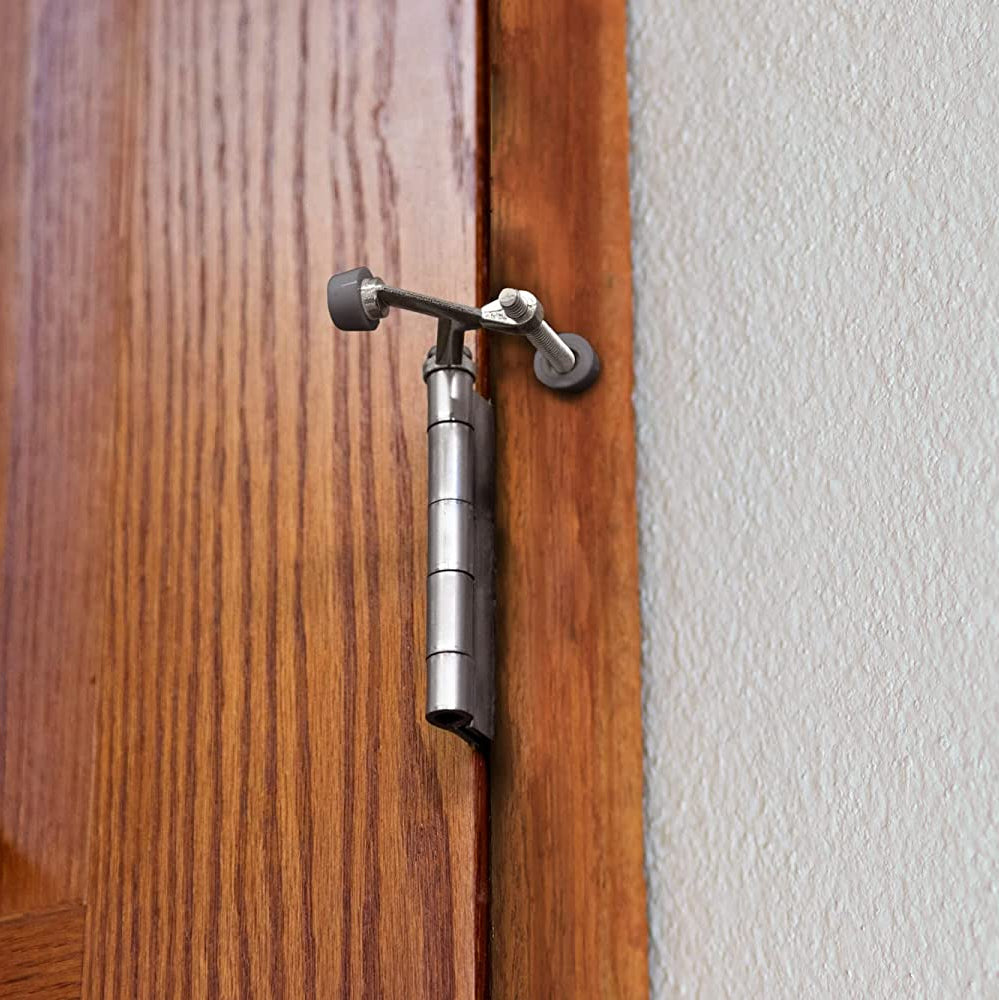
Hinge pin stops limit the swing angle at the hinge—great when a door would otherwise hit a vanity, fridge panel, or toilet.
- Install: Remove a hinge pin (usually the top hinge), slide the stop over the pin beneath the cap, then reinsert the pin. Adjust the rubber pads to set the max swing.
- Light- vs Heavy-Duty: Use light-duty for hollow-core interior doors. Choose heavy-duty for solid-core or exterior doors.

Pro Tips for a Clean Install
- Measure twice: Open the door slowly and mark the first impact point (knob or lever). That’s where your stop should intervene.
- Match finishes: Coordinate stops with hinges and levers (e.g., black with black, satin nickel with stainless looks).
- Mind the flooring: Avoid floor stops on carpet; use masonry bits/anchors for concrete or tile.
- Adjust don’t force: With hinge stops, dial in the angle—don’t overtighten against trim or jambs.
Choose the right door stop (fast)
Most customers are deciding between these three:
- Baseboard stops — best for most interior doors
- Hinge pin stops — best near toilets/vanities/cabinets
- Floor stops — best for heavy doors on hard floors
DoorCorner perks: matching screws included on many styles • fast shipping on most orders • multiple finishes to match your hardware
Wrap-Up
Whatever your layout, there’s a door stop that’ll protect your walls, cabinetry, and fixtures—and it can match your hardware, too. Need help choosing? We’re happy to recommend the right type, finish, and duty rating for each door.


